It’s Not Just in Your Head: The Weird Physical Symptoms of Anxiety
The physical symptoms of anxiety are more common than most people realise. From a racing heart and tight muscles to stomach problems and sleepless nights, anxiety doesn’t just live in your mind — it shows up in your body. In this guide, you’ll learn why these symptoms happen, what they feel like, and how to manage them.
Key takeaways
- Anxiety isn’t just emotional; it can cause real physical symptoms like a racing heart, muscle tension, and stomach discomfort.
- These symptoms happen because anxiety activates your body’s stress response, even when there’s no real danger.
- Understanding how your body reacts can help you recognise anxiety-related symptoms and not confuse them with other conditions.
- Simple coping strategies like breathing exercises and relaxation techniques can help manage symptoms.
- If symptoms persist or begin to affect your daily life, seeking professional help early is important.
In this article
The physical symptoms of anxiety are more common than most people realise. From a racing heart and tight muscles to stomach problems and sleepless nights, anxiety doesn’t just live in your mind — it shows up in your body. In this guide, you’ll learn why these symptoms happen, what they feel like, and how to manage them.
Prefer to watch instead of read? We get it. Watch the video version of this article here.
You might be used to the racing thoughts, sudden bursts of fear, or the mental tension that comes with anxiety. But nothing really prepares you for the moment you realise that the tightness in your shoulders or the ache in your stomach is also a symptom of anxiety.
So if you’re asking, “Can anxiety cause physical symptoms?” The answer is yes.
These sensations are real. They are just your body’s way of responding to the stress you’re experiencing.
When Does Anxiety Become a Problem?
Anxiety often occurs without a clear trigger, and during an episode, you may experience a mix of physical and psychological symptoms.
It’s important to know that feeling anxious is a normal part of life and can even be helpful, because it pushes you to act when you should. But when anxiety lingers and starts to interfere with your life and relationships, it may have developed into an anxiety disorder.
In this article, you’ll learn what the physical symptoms of anxiety are, why they happen, and evidence-based strategies to manage them effectively.

Why Does Anxiety Cause Physical Symptoms?
Anxiety occurs when your body reacts as if there is a threat, even when no real danger is present.
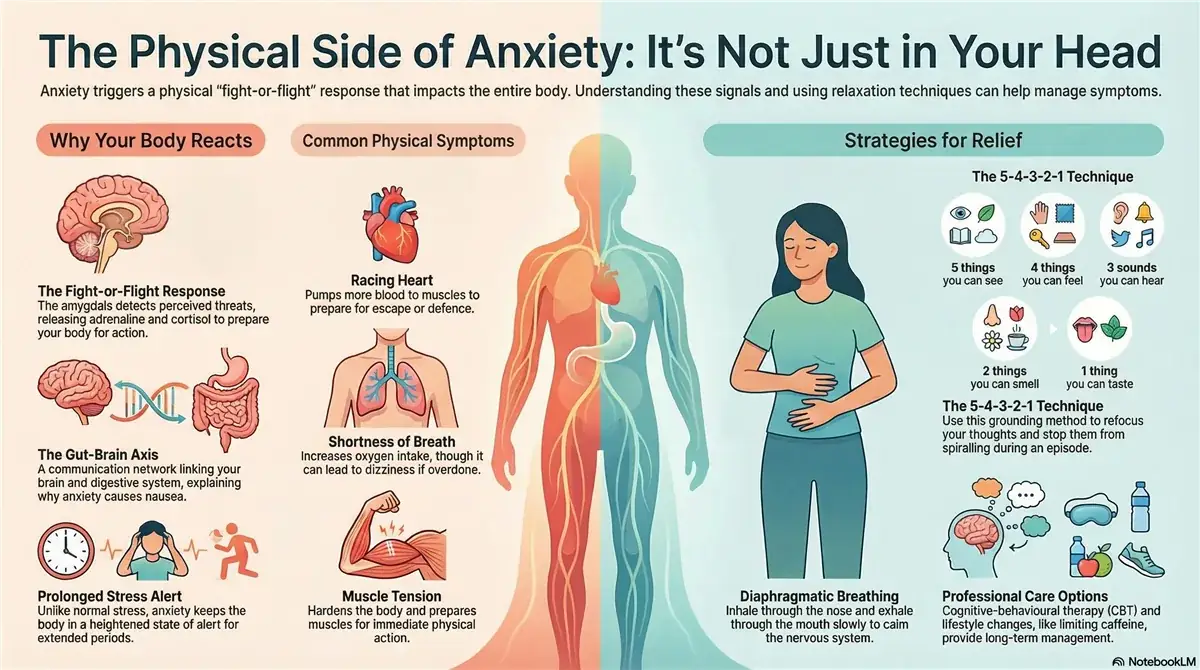
Within your brain, the amygdala, a small structure, plays a key role by detecting perceived threats and activating the fight-or-flight response (Carty – The Amygdala, 2025). This response triggers your sympathetic nervous system, which leads to increased heart rate, breathing, and blood flow to muscles to prepare the body to respond to danger (Harvard Health – Understanding the stress response, 2024).
At the same time, your adrenal glands release stress hormones such as adrenaline and cortisol.
These hormones cause many of the physical symptoms you experience during anxiety, including rapid heartbeat, shallow breathing, sweating, and muscle tension.
In normal situations, these responses calm down once the hthreat is gone. But with anxiety, the body can remain in a heightened state of alert for extended periods (Science Direct – Genetic insights into anxiety, 2023).
As you might expect, this prolonged stress response isn’t great for your body and can contribute to persistent physical symptoms like fatigue and even harmful changes to your organs.
What Are The Physical Symptoms Of Anxiety?
The symptoms of anxiety can be unpleasant and can even make your anxiety feel worse. Surprisingly, these symptoms can happen unpredictably even when you are not anxious (Healthline – Subconscious anxiety, 2021).
While you may be dealing with fear and worry during an episode, your brain also releases stress hormones meant to help you cope — but these are what cause the physical symptoms.
- Racing heart
Do you feel like your heart is going to jump out of your chest when you’re anxious? That’s a common symptom of anxiety (WHO – Anxiety disorders, 2025).
This increased heart rate happens because anxiety triggers your body’s fight-or-flight response as a form of defence. Usually, in emergencies, a faster heart rate means your heart can pump more blood to your muscles should you need to run from the threat.
However, in anxiety, this threat is often exaggerated.
Cardiovascular and Respiratory Symptoms
- Shortness of breath
Shortness of breath is a common physical symptom of anxiety. When you feel anxious, your heart rate increases, causing your body to take in more oxygen.
In situations of real danger where you need to escape, this response can be helpful. However, during anxiety, this can backfire. You may start breathing faster than your body actually needs. As a result, you might start to feel even more breathless or dizzy.
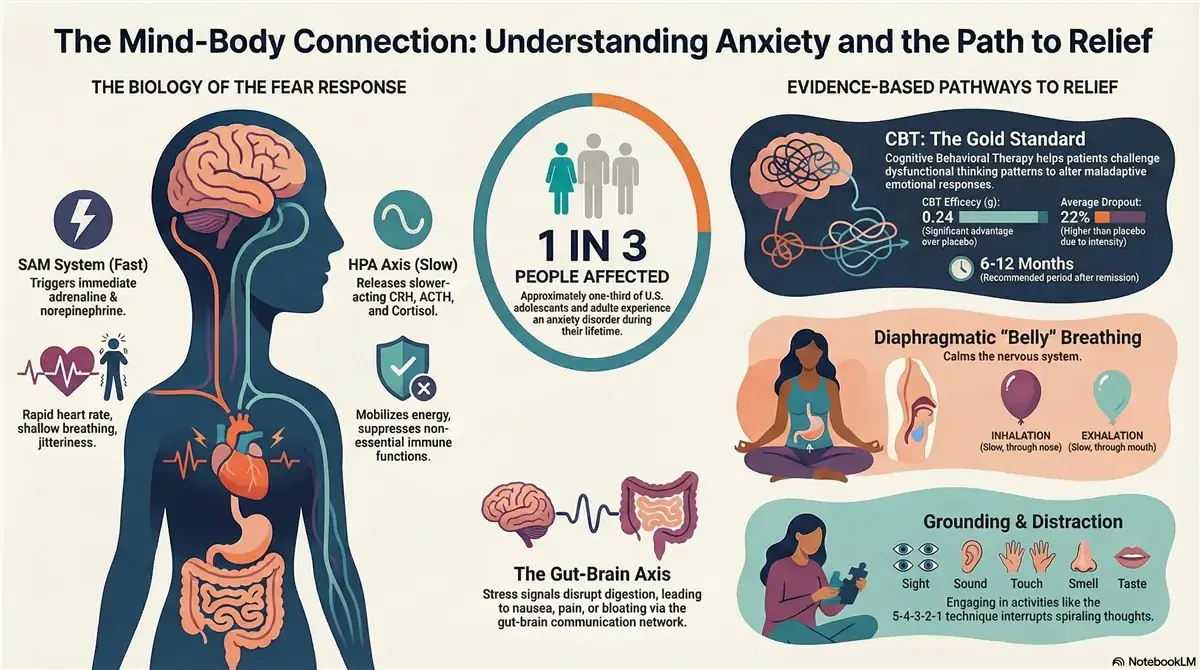
Because of this, many clinicians recommend diaphragmatic or “belly” breathing, as this technique encourages slower, deeper breaths which can help calm the nervous system and reduce the physical sensations of anxiety (National Institute of Mental Health – Anxiety disorders, 2023).
- Shakiness
It’s no news that anxiety can leave you shaking like a leaf. Even when you’re supposed to be calm for a meet and greet or a presentation, you might notice your hands, legs, or even your voice might start to tremble. This happens because your body is releasing stress hormones that prepare your muscles for action. That surge of energy can make your muscles feel jittery, even when there’s no real danger.
Other Common Physical Symptoms
- Insomnia
One of the symptoms of anxiety is difficulty falling or staying asleep, especially when you wake up in the middle of the night. The accompanying racing thoughts don’t help either.
Sadly, poor sleep can worsen anxiety, creating a vicious cycle. Recent research confirms that insomnia and anxiety feed off each other (Science Direct – Sleep disturbances, 2025).
- Stomach discomfort
For many people, anxiety doesn’t just affect their mind; it can show up in their stomach, too. This is partly due to the gut–brain axis, a communication network linking the brain and the digestive system.
When stress or anxiety activates this system, it can interfere with normal digestion and lead to issues like stomach pain, bloating, constipation, or diarrhea (Science Direct – Gut-brain axis and anxiety, 2024). Researchers note that this close relationship between the brain and gut helps explain why emotional stress can quickly trigger digestive symptoms and vice versa.
- Muscle tightness and pain
Muscle tightness and soreness are also common physical symptoms of anxiety.
According to the American Psychological Association, muscles tense up as part of the body’s stress response. The muscle tension can remain for long periods, leading to stiffness and pain, particularly in the neck, shoulders, or back. Some people may also experience clenching of their jaw, which can contribute to headaches.
- Nausea
It’s quite common for anxiety to make you feel sick. This partly comes down to the gut–brain axis, which links your brain and digestive system. When you’re anxious, stress signals can disrupt normal digestion, leading to nausea. A 2023 study in BMC Psychiatry found that people with digestive symptoms like nausea were more likely to report higher levels of anxiety, highlighting how closely your gut and brain are connected.
Does Anxiety Always Come With Physical Symptoms?
Not everyone experiences the same physical symptoms of anxiety, and some people may not notice bodily symptoms at all. And this is where anxiety can be a bit confusing.
Research shows that anxiety exists on a spectrum. While physical symptoms are common, they are not present in every case or at every moment (National Health Service – Mental health survey, 2023).
How you experience anxiety depends on several factors: your stress levels, past experiences, overall health, and how tuned in you are to your body’s signals.
It’s also important to know that physical symptoms can come and go. You might have an episode where your symptoms are very physical, and at other times, it may feel more mental or emotional. This variation is normal and doesn’t make your experience any less valid.
What matters is recognising your own pattern and knowing how best to address it.
Coping With The Physical Symptoms of Anxiety
Managing the physical symptoms of anxiety often starts with understanding what’s happening in your body. In some cases, medications also have a role in treating anxiety. Many clinical guidelines suggest that psychotherapy, especially cognitive‑behavioral therapy, medication, or a combination of both can be effective for treating anxiety disorders. Here are some key changes that can help you cope better with your symptoms:
- Learn the symptoms of anxiety
What physical symptoms might you experience when you’re anxious? And which ones have you experienced? Are you able to tell when a stomachache is just hunger and not anxiety?
Getting to know the possibilities can help you be better prepared to cope with your symptoms.
- Try To Relax Your Body
One way to relax your body during anxiety is to try breathing exercises (like diaphragmatic breathing), which helps your body relax. It takes a few minutes to do, and you’ll enjoy the benefits if you practice it regularly.
How to Practice Diaphragmatic Breathing
Here’s how to practice this breathing technique:
- Choose a comfortable position, standing, sitting with back support, or lying (on a bed, floor, or mat).
- Adjust your body so you feel relaxed and loosen tight clothing.
- Keep your feet about hip-width apart.
- If lying down, rest your arms slightly away from your body with palms facing up; if sitting, rest your arms on the chair.
- Breathe slowly and deeply into your stomach without forcing it, inhaling through your nose and exhaling through your mouth.
- Try counting slowly from 1–5 as you breathe in and out to keep a steady rhythm.
Continue the breathing exercise for about 5 minutes.
- Distract/Refocus Your Thoughts
When you start to feel anxious, acknowledge that your emotional and physical symptoms are real. Avoiding the feeling can make it worse, so the next step is to find an activity.
You can watch a movie, do the laundry, or do a puzzle. You might start to feel better when you take your mind off your symptoms.
Another helpful way is to do the 5-4-3-2-1 grounding technique that helps keep your thoughts from spiralling.
- Be Reassured
Although anxiety can be distressing, rest assured that it is not dangerous. Your symptoms will usually ease once the episode stops.
When To Seek Professional Help
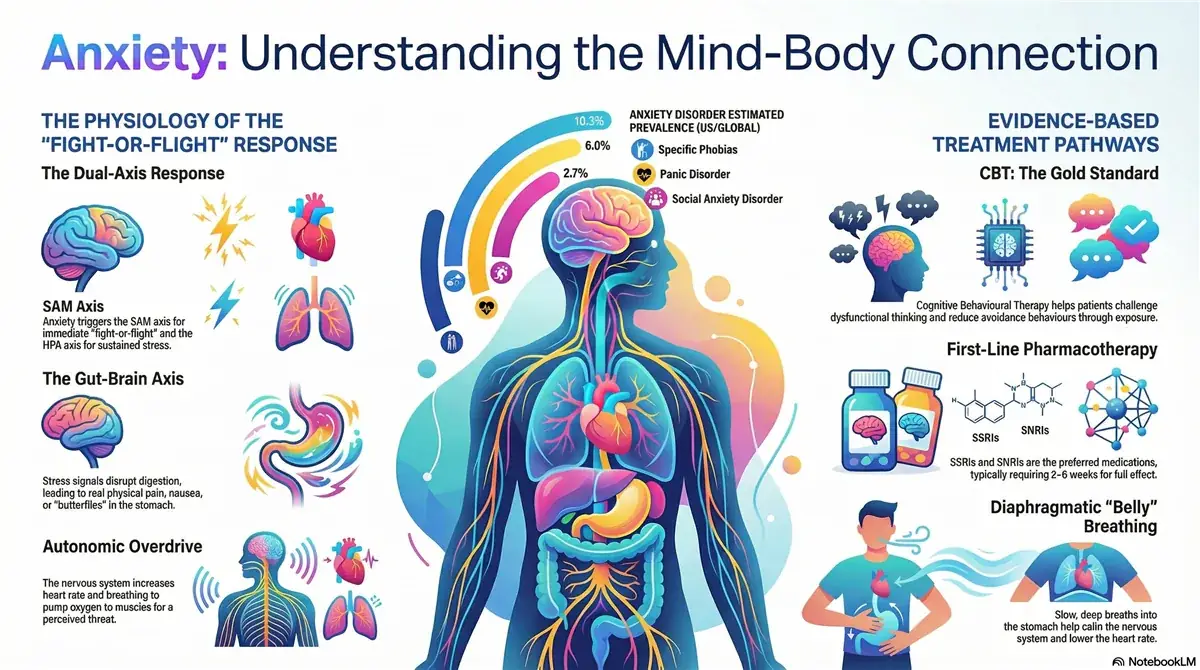
If you’ve tried to manage your symptoms on your own without results, it might be time to seek professional help. Psychologists are trained to diagnose and manage anxiety disorders.
Some of the options for treatment are:
- Cognitive-behavioral therapy (CBT) is also known as talking therapy. It can be effective in managing anxiety symptoms, as it helps you understand thought patterns that contribute to anxiety.
- Personalised coping techniques to help reduce anxiety-related behaviours.
- Medications like antidepressants and anti-anxiety medications might be prescribed.
- Lifestyle changes, including exercising more, getting enough sleep, and limiting caffeine, can help ease anxiety symptoms.
The goal of seeking professional care is to get care tailored to your unique needs.
How To Differentiate Anxiety From Other Conditions
Some symptoms associated with anxiety can also stem from other medical or psychological conditions. Because of this, it might be difficult to determine whether anxiety is the true cause of your symptoms.
One of the first steps in identifying anxiety is to observe your body’s responses. Consider whether your symptoms began during a stressful period or after experiencing strong or unpleasant emotions.
If your symptoms appear to occur alongside emotional stress, it is possible that they were triggered by anxiety or emotional distress (Harvard Health – Recognising and easing physical symptoms of anxiety, 2024).
Some conditions with similar symptoms to anxiety are:
- Thyroid disorders
- Nutrient deficiencies (Magnesium, B12)
- Hypoglycaemia
- Postural Orthostatic Tachycardia Syndrome (POTS)
- Cardiac arrhythmia
- Depression
- ADHD
This makes it important to check your symptoms with a trained health professional to distinguish key symptoms of anxiety from other concerns.
Wrapping It Up
The physical symptoms of anxiety look different for everyone. Your symptoms may not align with the typical ones others experience, but this doesn’t make your feelings less valid.
Learn how your body responds to stress, seek professional help early, and live reassured knowing you’re not alone.
Questions readers ask
How long do physical symptoms of anxiety last?
The physical symptoms of anxiety usually settle once the episode passes. However, in some cases, it might settle in a few days.
When should I worry about physical symptoms of anxiety?
If your symptoms are severe or interfere with your daily life, it’s important to seek professional help. It’s also a good idea to rule out other medical conditions, especially if the symptoms are new or unusual.
Can anxiety cause physical symptoms even when I don’t feel anxious?
Yes. Anxiety can affect your body even when you’re not fully aware of feeling anxious. Physical symptoms like a racing heart can sometimes appear before you recognise the emotional stress.
Written by
 Dr. Chiamaka Wisdom-AsotahSpecialty Registrar, NHS England · MBBS, MPH
Dr. Chiamaka Wisdom-Asotah is a medical doctor and global health professional holding an MBBS and a Master of Public Health from Keele University.
Full bio: Dr. Chiamaka Wisdom-AsotahReviewed by
 Bree SharpEditor
Reviews every article against our editorial standards before it’s published.
Our editorial standardsThis article is for general wellness and educational purposes only. It is not a substitute for professional medical advice, diagnosis, or treatment. Always consult a qualified healthcare provider before making changes to your health routine, including the use of supplements, especially if you are pregnant, breastfeeding, taking medication, or managing a medical condition.


