Supplements for Burnout: 6 Options To Help You Recover
Feeling drained, overwhelmed, or like you’re running on empty? This evidence-informed guide breaks down six supplements for burnout that may help support stress resilience, better sleep, balanced mood, and renewed energy — with clear safety tips so you stay in control.

Key takeaways
- Burnout isn’t just exhaustion — it biochemically depletes the specific nutrients your brain and nervous system need to regulate stress, mood, and energy.
- Supplements don’t replace food, sleep, or professional support — they fill the gaps that diet alone may struggle to close during active recovery.
- Magnesium, omega-3s, L-theanine, vitamin C, B-complex, and vitamin D each target different burnout symptoms — matching the right supplement to your worst symptom matters more than taking everything at once.
- Start with one or two supplements, not six — your nervous system recovers better with gradual, consistent support than an overwhelming protocol.
- Forms matter as much as doses — magnesium glycinate absorbs differently than magnesium oxide, and methylated B vitamins outperform synthetic ones significantly.
- Most supplements take 2–8 weeks to show meaningful results, with the exception of L-theanine, which can produce calm alertness within 30–60 minutes.
In this guide
When burnout hits, it doesn’t just drain your motivation—it depletes the specific nutrients your brain and nervous system need to function. Cortisol stays elevated. Magnesium gets burned through. B vitamins that fuel your neurotransmitters run low. And no amount of willpower can override biochemistry. That’s where supplements for burnout come in—not as a magic fix, but as targeted nutritional support that helps your body do what it’s trying to do: recover. The right supplements can help regulate your stress hormones, rebuild depleted neurotransmitters, improve sleep quality, and restore the mental clarity that burnout takes away.
In this guide, we’ll walk through 6 evidence-based supplements that support burnout recovery, explain how each one works (not just what it does), and help you decide which ones match your specific symptoms. We’ll also cover realistic timelines, dosing guidance, and an honest look at supplement safety in 2026—because not all products on the shelf deserve your trust.
If you haven’t already addressed the nutritional foundation, start with our companion guide to burnout nutrition: the best foods for energy, mood, and brain health. Food comes first. Supplements fill the gaps that food alone can’t always close.
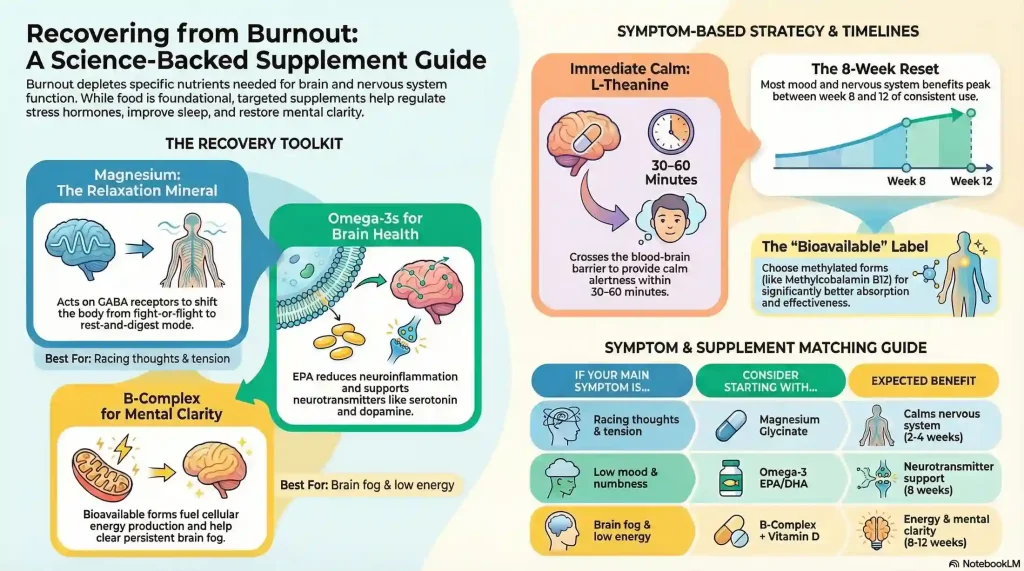
The 6 Supplements at a Glance
| Supplement | Best Form | Typical Daily Dose | Time to Effect | Best For |
|---|---|---|---|---|
| Magnesium | Glycinate (malate for fatigue, threonate for focus) | 200–400 mg elemental | 2–4 weeks for sleep, 4–8 for calm | Tension, poor sleep, racing thoughts |
| Omega-3 EPA/DHA | Triglyceride form, at least 500 mg EPA per serving | 1–2 g combined EPA+DHA | 4–8 weeks, full effect 8–12 | Low mood, emotional numbness |
| L-Theanine | Capsule, alone or with caffeine | 100–200 mg as needed, or 200 mg twice daily | 30–60 minutes | Acute anxiety, racing thoughts |
| Vitamin C | Calcium ascorbate, or liposomal above 1,000 mg | 200–500 mg, up to 1,000 mg divided | 2–4 weeks | Stress resilience, adrenal support |
| B-Complex | Methylated forms: methylcobalamin, L-5-MTHF, P5P | 25–100 mg per B vitamin | 4–6 weeks, full effect 8–12 | Brain fog, fatigue, irritability |
| Vitamin D | D3 — test your level first | 600–2,000 IU, or 2,000–4,000 IU to correct deficiency | 6–12 weeks | Low mood, disrupted sleep rhythm |
Full details on each — forms, safety notes, and drug interactions — are below. And if brain fog is your loudest symptom, our guide to cognitive burnout and brain fog explains what is happening in your brain and how to get your clarity back.
Too drained to read right now? No judgement. Watch ‘The Burnout Protocol: Matching Symptoms to Science’ on YouTube and let the science come to you.
6 Supplements For Burnout Recovery
1. Magnesium (Magnesium Glycinate)
Tense muscles, sleeping difficulties, and a racing heartbeat are all common signs of burnout. If that racing heartbeat sometimes feels sudden and overwhelming rather than stress-related, it may be worth understanding whether you’re experiencing a panic attack or anxiety—the two are different and respond to different approaches.
How magnesium works: Magnesium is often called the “relaxation mineral” because it acts on the GABA receptors in your nervous system—the same receptors that many anti-anxiety medications target. It dampens the excitatory neurotransmitter glutamate, helping shift your body from sympathetic (fight-or-flight) to parasympathetic (rest-and-digest) mode. Research published in Nutrients shows that magnesium supplementation can reduce muscle tension and promote more restful sleep, while a 2022 clinical study found it can lower stress levels and support a more balanced mood.
Forms matter: Not all magnesium is created equal. Magnesium glycinate is the best choice for nervous system support and sleep because it pairs magnesium with glycine (an amino acid that further calms the nervous system). Magnesium malate supports cellular energy production if fatigue is your primary symptom. Magnesium threonate crosses the blood-brain barrier, making it useful for cognitive symptoms of burnout. Avoid magnesium oxide—it has poor absorption and a laxative effect.
Dosing & timeline: Most people tolerate 200–400 mg daily without issues, though some benefit from up to 600 mg. You’ll likely notice improvements in sleep quality within 2–4 weeks and deeper nervous system calming by week 4–8. Start low (150 mg) and increase gradually. Check the label for “elemental magnesium”—this is what your body actually absorbs, not the total compound weight (according to the NIH).
Drug interactions: Magnesium may interact with certain medications, including some antibiotics, antacids, and zinc supplements (space them 2+ hours apart). If you have kidney problems or take regular medication, check with your doctor before starting.
Who benefits most: Anyone experiencing muscle tension, sleep disruption, or racing thoughts. Shift workers and those with chronically elevated cortisol often see the most dramatic improvements.
2. Omega-3 EPA/DHA
Omega-3 fatty acids—particularly EPA (eicosapentaenoic acid) and DHA (docosahexaenoic acid)—are fundamental to brain and nervous-system health. They do three critical things during burnout recovery: reduce neuroinflammation (which contributes to mood symptoms and cognitive fatigue), support the cell membrane fluidity necessary for neurons to communicate, and serve as precursors for neurotransmitters like serotonin and dopamine—both depleted during chronic stress.
Supplementing with EPA/DHA has been studied for its potential to ease tension and support more stable moods over time (Saadh et al., 2025; Madison et al., 2021).
EPA vs. DHA—which matters for burnout? While both are important, EPA is the primary omega-3 driving mood and stress benefits. Studies on depression and anxiety typically use 1,000–2,000 mg of EPA combined with 500–1,000 mg of DHA. Check your supplement label: the ratio matters. Look for at least 500 mg EPA per serving to see a noticeable effect.
Timeline & dosing: Most studies showing mood benefits use 1–2 g total omega-3 (EPA+DHA) daily. Give it 4–8 weeks before expecting noticeable changes; full benefits typically appear by week 8–12. Some people on high doses report a fishy aftertaste or mild digestive upset—this usually resolves with food or switching to an enteric-coated form (as noted in clinical reviews).
Fish oil vs. algae: Both provide EPA/DHA, though plant-based diets often rely on algae supplements. Algae-based omega-3 is effective, though it typically contains less EPA than fish oil—something to account for when dosing (according to a 2025 review). Choose a form labeled “triglyceride”—it absorbs better than “ethyl ester.”
Safety note: Higher doses may increase bleeding risk if you’re on blood thinners (warfarin, apixaban) according to the NCCIH, and omega-3 may trigger mania in people with bipolar disorder according to Harvard Health. Check with your doctor before starting if either applies.
3. L-Theanine
If stress makes your heart race or feel overwhelming, L-theanine may be worth considering. It’s a calming amino acid found naturally in green tea—but supplements provide concentrated amounts that actually reach your brain.
How L-theanine works: L-theanine crosses the blood-brain barrier and increases alpha brainwave activity (the same pattern seen in meditation). This creates a state of calm alertness—you’re relaxed but focused, not drowsy. It works within 30–60 minutes and doesn’t impair cognition the way sedatives do.
Dosing & timing: For an acute anxiety spike, 100–200 mg taken as needed works well. For sustained support, 200 mg twice daily (morning and afternoon) is typical in research studies, and most people can take it long-term safely (a 2024 clinical study). L-theanine pairs well with caffeine if you drink tea or coffee—it smooths out caffeine’s jittery edge and prolongs calm focus. If you’re sensitive to caffeine or use L-theanine in the evening, take it without caffeine.
Timeline: You may notice a settling effect within the first dose, but cumulative benefits on sleep quality and baseline anxiety build over 2–4 weeks.
Who benefits most: Anyone with racing thoughts, caffeine sensitivity, or evening anxiety. It’s also safe for shift workers since it promotes calm without inducing sleep.
Safety & drug interactions: L-theanine is generally well-tolerated. Speak with a doctor if you’re pregnant, breastfeeding, or taking blood pressure medication, as L-theanine may have mild effects on blood pressure (per PubChem). It’s safe with SSRIs and most other psychiatric medications, though always verify with your provider.
4. Vitamin C
Vitamin C is known for immune support, but it plays a critical role in how your body handles stress—in fact, your adrenal glands contain some of the highest concentrations of vitamin C in the body.
The stress & vitamin C connection: During stress, your body demands large amounts of vitamin C to synthesize catecholamines (epinephrine and norepinephrine—your stress hormones). Vitamin C also acts as a cofactor in converting tyrosine to these neurotransmitters and has been shown in studies to dampen excessive cortisol secretion (research suggests). As a powerful antioxidant, it protects cells from the oxidative stress triggered by high cortisol.
Forms & absorption: Ascorbic acid is the cheapest form but can upset sensitive stomachs. Calcium ascorbate is gentler and includes minerals. Liposomal vitamin C has superior absorption, though it’s more expensive. The form matters most if you’re taking doses above 1,000 mg daily.
Dosing & timeline: For basic stress support, 200–500 mg daily is sufficient. During periods of high stress or burnout, 500–1,000 mg daily is reasonable (divided into doses—your body can only absorb about 200 mg at a time). Expect to notice a shift in stress resilience within 2–4 weeks of consistent use (per the NIH).
Safety: Taking more than 1–2 g/day can lead to stomach upset or diarrhea. People with a history of kidney stones or iron-loading conditions (hemochromatosis) should speak to a healthcare provider before supplementing (a 2023 review). The “rebound scurvy” myth—the idea that stopping high-dose vitamin C causes deficiency—is unfounded; your body simply returns to baseline.
Who benefits most: Smokers (smoking depletes vitamin C), those under chronic stress, and people with poor dietary intake of citrus, peppers, and leafy greens.
5. B-Complex Vitamins (Bioavailable Forms)
Burnout disrupts your mood, focus, and energy. All three rely on B vitamins, which act as cofactors in synthesizing neurotransmitters (serotonin, dopamine, GABA) and producing cellular energy (ATP).
Which B vitamin does what? B6 (Pyridoxal-5-Phosphate) converts amino acids into neurotransmitters—low levels correlate with irritability and mood swings. B12 (Cobalamin) is critical for energy metabolism and myelin formation (nerve insulation)—deficiency causes fatigue and brain fog. B9 (Folate, not folic acid) supports methylation cycles that produce SAM-e (a mood stabilizer)—low folate increases depression risk. B5 (Pantothenic Acid) supports adrenal function and cortisol metabolism. B1, B2, B3 drive core energy production in your mitochondria.
Some research shows that people taking a bioavailable B-complex report feeling less overwhelmed and better able to cope with workplace stress over time. A systematic review found that low levels of B6, B9, and B12 are linked to fatigue, irritability, and difficulty concentrating.
Dosing & timeline: RDA amounts (1–2 mg per B vitamin) maintain baseline; therapeutic ranges for burnout are typically 25–100 mg per B vitamin in a formula. Expect 4–6 weeks before noticeable improvement in mental clarity and mood stability; full nervous system support takes 8–12 weeks.
Forms matter: Look for “bioavailable” or “active” forms on the label. For B12: methylcobalamin (better retention) over cyanocobalamin. For B9: methylfolate (L-5-MTHF), NOT folic acid. For B6: pyridoxal-5-phosphate (P5P), not pyridoxine. About 40% of the population has a MTHFR polymorphism that reduces folate metabolism—if you have one, methylated forms are significantly more effective. No genetic test needed to try them (according to the NHS).
Safety note: B vitamins are generally safe at appropriate doses, but very high amounts can cause side effects: niacin may trigger flushing, and excessive B6 over long periods may irritate the nerves.
Who benefits most: Vegans and vegetarians (B12), anyone on SSRIs or hormonal contraceptives (which increase B vitamin depletion), shift workers, and high-stress professions (finance, healthcare, caregiving).
6. Vitamin D
Vitamin D (technically a steroid hormone, not a vitamin) plays a central role in mood regulation. It acts as a transcription factor for genes that produce serotonin and regulate circadian rhythm—both core to stress resilience and sleep quality. Vitamin D receptors are found throughout the brain, particularly in regions governing mood and stress response (Arabshahi et al., 2024; Huiberts & Smolders, 2021).
Test before you supplement: Unlike most vitamins, vitamin D status can be easily measured via blood test (25-hydroxyvitamin D). The optimal range for mood and immune function is 40–60 ng/mL; many people are below 30 ng/mL without knowing it. Testing first allows you to dose appropriately rather than guessing.
Dosing & timeline: For prevention: 600–2,000 IU/day for those with adequate sun exposure. For deficiency correction: 2,000–4,000 IU/day (typically 8–12 weeks to reach optimal levels). For seasonal support: increase dose by 1,000–2,000 IU during winter months if you live in a northern climate. Expect mood changes within 6–12 weeks; circadian rhythm improvements (better sleep/wake timing) often appear first.
Who benefits most: People in northern latitudes (limited winter sunlight), shift workers, indoor workers, and those with darker skin tones (who require 3–6x more sun exposure for the same vitamin D synthesis).
Safety & toxicity: Vitamin D toxicity is rare—you’d need to take 10,000+ IU daily for months to risk problems. Many practitioners safely recommend 5,000–7,000 IU for deficiency correction. If you’re supplementing at high doses, periodic testing (every 3–6 months) is prudent (clinical resources note).
A Note on Supplement Safety: What “Not FDA-Approved” Actually Means
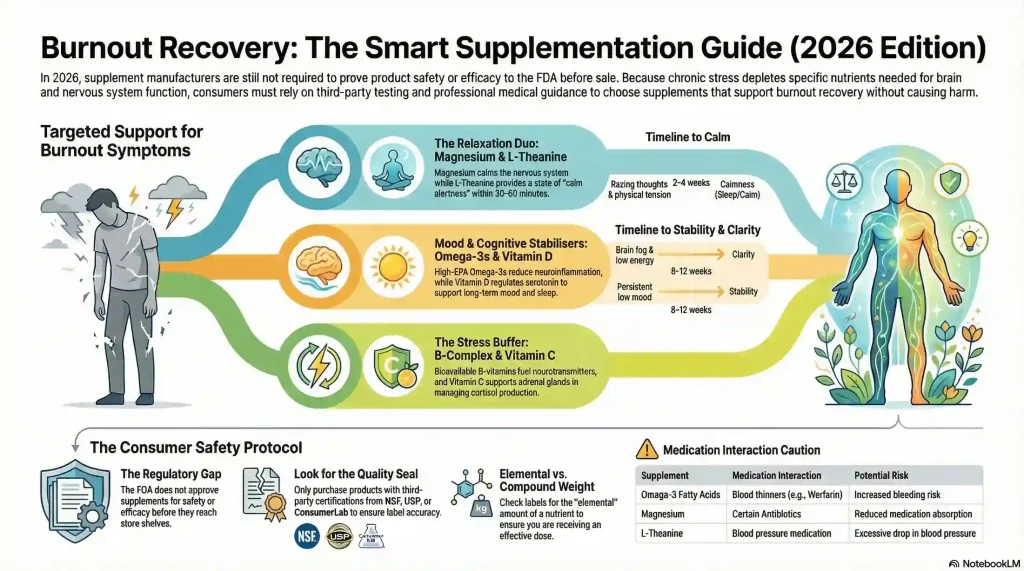
Before we go further, let’s be transparent about something most supplement articles skip: dietary supplements are not regulated like pharmaceutical drugs.
Under the Dietary Supplement Health and Education Act (DSHEA) of 1994—still the governing law in 2026—supplement manufacturers can sell products without proving to the FDA that they’re safe or effective before they hit store shelves. Unlike prescription medications, which undergo years of clinical trials, supplements enter the market with no required pre-market approval for efficacy. The FDA can only intervene after a product is found to be unsafe—which means the burden of proof falls on you, the consumer, to choose wisely.
This doesn’t mean all supplements are untrustworthy. It means you need to be a more informed buyer. Here’s how to protect yourself:
- Look for third-party testing. Certifications from NSF, USP, or ConsumerLab indicate the label claim is accurate and contaminants (heavy metals, bacteria) are below safe limits. These certifications cost brands money—look for them as a sign of integrity.
- Check the form, not just the amount. A bottle labeled “Magnesium 500 mg” might contain only 100 mg of elemental magnesium if the rest is filler. The label should state “elemental” amounts separately from total compound weight.
- Watch for hidden ingredients. Some supplements contain binders, fillers, or allergens (gluten, soy) that trigger inflammation—counterproductive for someone already dealing with burnout.
- Match the dose to the research. A B-complex with 1.5 mg of each B vitamin is maintenance dosing. A vitamin D supplement with 400 IU is often insufficient for deficiency correction. Compare what’s in the bottle to what the studies actually used.
- Work with a healthcare provider. This is especially important if you take prescription medications, have kidney disease, or are managing a chronic condition. Supplements can interact with drugs in ways that aren’t always obvious.
The supplement industry is evolving—the FDA held a public meeting in March 2026 exploring the scope of what qualifies as a dietary supplement ingredient, and new legislation is being proposed to strengthen oversight. But until those changes take effect, your best defense is education, quality brands, and professional guidance.
How to Choose the Right Supplements for Burnout
To choose the best supplement for you, start by identifying the burnout symptoms that affect you most. Use this quick map:
| If Your Main Symptom Is… | Consider Starting With… | Why |
|---|---|---|
| Racing thoughts, physical tension | Magnesium Glycinate | Directly calms the nervous system; shows effects in 2–4 weeks |
| Persistent low mood, emotional numbness | Omega-3 EPA/DHA + Vitamin D | Support neurotransmitter production; mood effects by week 8 |
| Brain fog, difficulty concentrating | B-Complex (methylated forms) | B vitamins fuel mental clarity and energy; full effect at 8–12 weeks |
| Exhaustion, low energy | B-Complex + Vitamin D | Address deficiency patterns common in burnout |
| Anxiety + tension | L-Theanine + Magnesium | Fastest-acting combination (effects within 30 min–4 weeks) |
| Cortisol dysregulation (doctor-confirmed) | Vitamin C + Magnesium + B5 | Support adrenal function; synergistic effect on HPA axis |
How to start: Pick 1–2 supplements from your symptom row. Dose at the levels mentioned in each section above. Give it 4–8 weeks before assessing effectiveness. Add another only if the first is tolerated well. Always check for quality, dosage, and possible interactions with other medications you’re on, and ideally consult a healthcare professional before adding anything new.
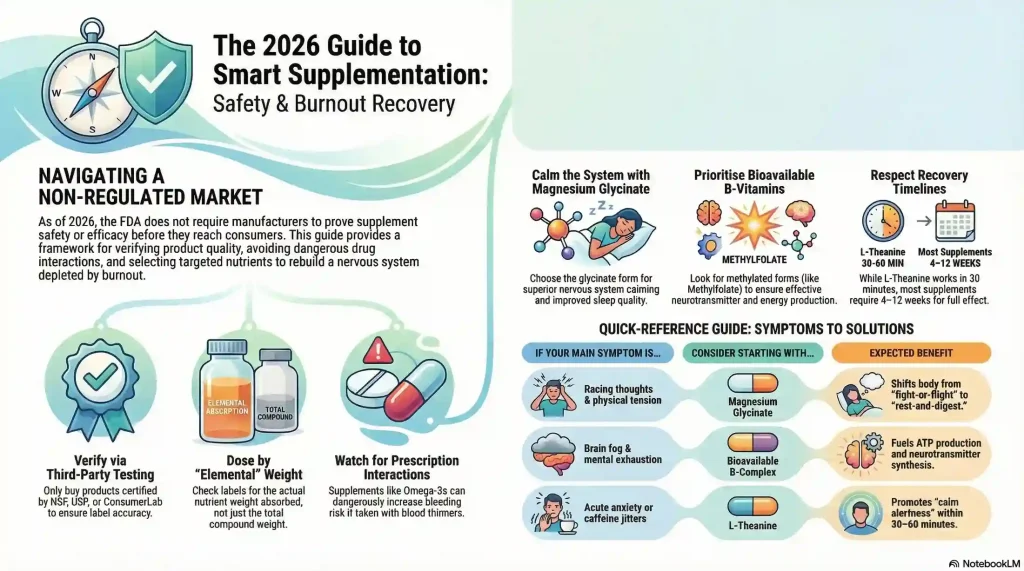
Timeline Expectations: When to Expect Benefits
Burnout didn’t develop overnight, and recovery won’t either. Understanding realistic timelines helps you stay committed without losing hope.
Fast-acting (acute effect): L-theanine works within 30–60 minutes for calm alertness. Magnesium typically improves sleep quality within 2–4 weeks, with deeper nervous system calming by week 4–8.
Medium-term (4–8 weeks): Omega-3 EPA/DHA produces noticeable mood shifts around week 4–8. Vitamin C builds stress resilience within 2–4 weeks. Vitamin D begins improving circadian rhythm by week 6–8.
Long-term (8–12+ weeks): B-complex achieves full nervous system reset around 8–12 weeks. Vitamin D reaches optimal blood levels with mood effects at this stage.
These timelines assume consistent supplementation and do not account for lifestyle factors. Poor sleep, continued overwork, or ongoing stress will slow recovery regardless of supplements. Supplements are most effective when paired with intentional rest, boundary-setting, and solid nutrition.
How Many Supplements for Burnout Should You Use at Once?
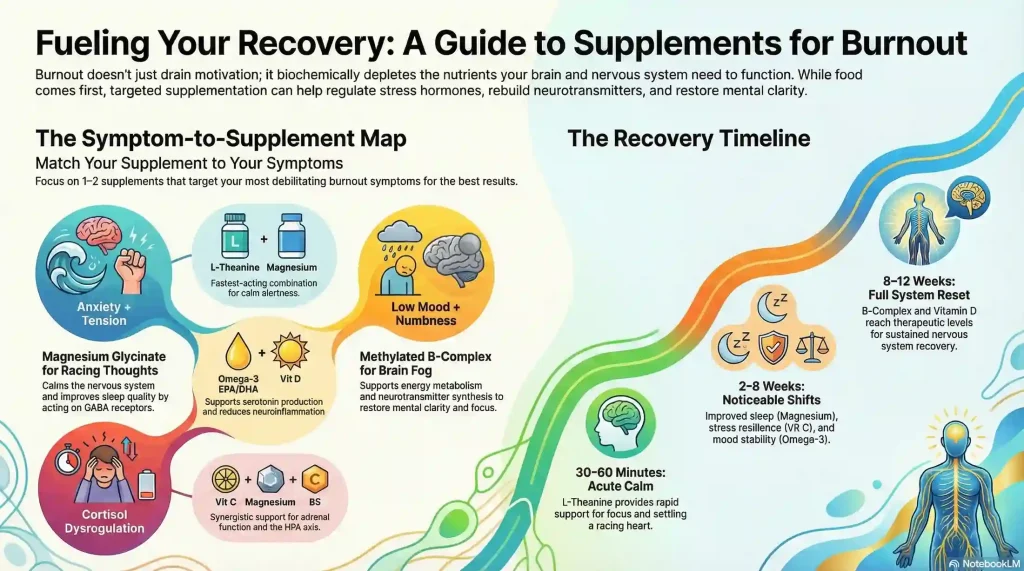
You don’t need to take all six supplements at once to see benefits. Start with one or two that target your main symptoms and see how your body responds. With guidance from your healthcare provider, you can gradually add others if needed. Always keep in mind that supplements are meant to support, not replace, a healthy diet, good sleep, exercise, or other burnout strategies.
Final Thoughts on Supplements for Burnout Recovery
Research on supplements for burnout recovery is ongoing, and results vary from person to person. Supplements work best when paired with lifestyle habits like sleep, nutrition, movement, boundaries, and rest. They can support your recovery, but they can’t undo the effects of an unhealthy diet or continued overwork. Think of supplements as targeted support, not a replacement for balanced meals and self-care.
Burnout recovery is never just one thing—it’s a combination of support, structure, rest, and giving your nervous system room to breathe.
Questions readers ask
What supplements help with burnout recovery?
Magnesium, B-complex vitamins, omega-3 fatty acids, L-theanine, vitamin C, and vitamin D are the most evidence-based options. Each supports a different aspect of recovery—from sleep and stress response to gut health and energy production. Start with 1–2 that match your primary symptoms.
Can supplements alone fix burnout?
No. Supplements support recovery but don’t replace the fundamentals—sleep, nutrition, boundaries, and rest. They work best as part of a broader approach that addresses why burnout happened in the first place.
How long do burnout supplements take to work?
L-theanine can produce calm within 30–60 minutes. Magnesium typically improves sleep within 2–4 weeks. Omega-3s and vitamin C show mood benefits by 4–8 weeks. B-complex and vitamin D take 8–12 weeks for full effect. Deeper recovery—rebuilding stress resilience and sustained focus—typically takes 2–3 months of consistent use alongside lifestyle changes.
Do I need to test my vitamin D level before supplementing?
It’s strongly recommended. A simple blood test (25-hydroxyvitamin D) tells you whether you’re deficient and how much you actually need. Many people are below the optimal range of 40–60 ng/mL without knowing it. Testing prevents both under-dosing and unnecessary high-dose supplementation.
What if I’m vegan or vegetarian? Which supplements for burnout should I prioritize?
B12 (methylcobalamin) is essential—it’s almost exclusively found in animal products, and deficiency is common in plant-based diets. Algae-based omega-3 provides EPA/DHA without fish oil. Vitamin D is also important, especially during winter months. Magnesium and L-theanine are already plant-compatible.
Can supplements replace therapy or medical help for burnout?
No. If your burnout is severe—if you’re experiencing persistent depression, inability to function at work, or thoughts of self-harm—supplements are not sufficient. Please reach out to a healthcare provider or mental health professional. Supplements are one layer of support, not a substitute for clinical care.
Are adaptogens like ashwagandha safe to take for stress?
Most adaptogens are well-tolerated, but they can interact with medications and aren’t right for everyone. Start with one at a low dose, give it two to four weeks, and consult a healthcare provider if you’re pregnant, nursing, or on prescription medication. For a deeper look, see our guide to adaptogens for stress.
Written by
 Dr. Chiamaka Wisdom-AsotahSpecialty Registrar, NHS England · MBBS, MPH
Dr. Chiamaka Wisdom-Asotah is a medical doctor and global health professional holding an MBBS and a Master of Public Health from Keele University.
Full bio: Dr. Chiamaka Wisdom-AsotahReviewed by
 Bree SharpEditor
Reviews every article against our editorial standards before it’s published.
Our editorial standardsThis article is for general wellness and educational purposes only. It is not a substitute for professional medical advice, diagnosis, or treatment. Always consult a qualified healthcare provider before making changes to your health routine, including the use of supplements, especially if you are pregnant, breastfeeding, taking medication, or managing a medical condition.