

Are blue LED lights good for sleep? Blue LED lights are generally not ideal close to bedtime because bright, blue‑rich light can keep you feeling more alert and make it harder to fall asleep.
Pros of blue LED lights at night:
- Can make a bedroom look bright, crisp, and modern, which some people enjoy in the evening.
Cons of blue LED lights at night:
- Bright, blue‑rich light in the hour or two before bed can delay natural sleepiness and make it harder to wind down.
Understanding the Connection Between Light and Sleep
Blue LED light and sleep are often discussed together, especially as many people spend their evenings under bright LED bulbs at home. This raises a common question: are blue LED lights good for sleep? Light helps regulate the body’s internal clock, influencing when we feel alert and when we begin to feel tired, in part by affecting melatonin and circadian rhythm (Live Science on how blue light affects sleep).
Cooler, brighter light is common in many modern LED bulbs used in homes, especially in spaces where bright and crisp lighting is preferred.
The timing and intensity of light exposure can shape how comfortable a bedroom environment feels at night, and brighter blue‑rich light in the late evening is more likely to keep you alert.
This guide explores how blue LED light fits into evening lighting habits and shares simple ways to create a calmer, more comfortable bedroom environment.
A quick note on melatonin
Melatonin is a natural hormone that helps signal when it’s time to sleep. Bright light, especially blue‑rich light in the evening, can reduce or delay melatonin, which may make it harder to feel sleepy at your usual time. Using softer, dimmer light in the hour or so before bed can help keep your natural sleep signals on track.
What Are Blue LED Bulbs
Blue LED bulbs emit light with a short wavelength, giving them a bright, crisp, and slightly cool appearance. These bulbs are common in modern homes, including bedside lamps, ceiling fixtures, and reading lights.
Bulbs with higher Kelvin ratings (typically above about 3500K) produce a sharper, cooler glow, while lower Kelvin bulbs (around 2700K–3000K) create softer tones that feel gentler on the eyes (Understanding Kelvin and light — Lumens).
Understanding these differences can help you choose better evening lighting and create a calm, comfortable bedroom atmosphere.
To see how this type of lighting affects evening relaxation, let’s explore what happens when evening arrives.
What Happens When Evening Arrives
Light signals the brain and body, influencing alertness, attention, and daily rhythms. Understanding how these cues work can help make evening lighting more comfortable and relaxing.
1. How LED Light Interacts with the Body
Light affects the body’s internal clock. Specialized light‑sensing cells in the eye detect brightness and certain wavelengths and send signals to the brain about when to stay alert or begin winding down (Retina function — Cleveland Clinic).
Key points to know:
- Retinal sensors track brightness and color.
- Evening dimming signals that night is near.
- Cooler, bright tones can increase alertness and make a space feel more active.
- Timing and intensity affect evening comfort and relaxation.
Example: Sitting in a room with a bright, cool-toned LED bulb at 10 PM can make it harder to feel ready for rest, even if you’re physically tired.
2. Why LED Light Can Make the Brain Feel More Alert
LED light can activate alertness pathways in the brain. During the day, this supports focus, quick thinking, and mental clarity. In the evening, bright or cool light can delay winding down because the brain interprets it as a signal to stay active, and because blue‑rich light can suppress melatonin more strongly.
Key points to know:
- Activates alertness pathways — your brain feels awake.
- Supports daytime focus — helpful for work or study.
- Evening exposure can slow relaxation.
- Mindful timing — adjusting brightness can help keep evenings calm.
Example: Sitting in a room with a bright, cool blue LED bulb at 10 PM may make it harder to feel ready for rest.
Choosing the right lighting for your bedroom can make a noticeable difference in how relaxed and ready for sleep the space feels at night.
Blue LED Bulb for the Room — Is It a Good Choice at Night?
A quieter inbox. One letter a week.
Wellness that doesn't shout. Every week, one thoughtful letter on rest, resilience, and the small habits that add up. Written with care, backed by evidence.
A blue LED bulb can make a room look bright, crisp, and modern. Yet at night, that cool glow may not always support a relaxed bedroom setting. Bedrooms are typically designed for calm and quiet comfort, and lighting strongly influences that atmosphere.
What to keep in mind when using blue LED bulbs at night:
• Cool-toned light feels energizing — it often gives a space a sharper, more active appearance rather than a cozy one.
• Strong brightness can change the room’s mood — the bedroom may start to resemble a work or study space instead of a place meant for rest.
• Evening comfort is important — many people prefer lighting that feels softer and more soothing before bedtime.
A simple approach: Notice how the room feels once the light turns on. If the glow is too sharp or stimulating, choosing a gentler tone can help create a more peaceful, comfortable bedroom environment at night.
Why it matters: Choosing the right bulb isn’t just about style—it sets the tone for rest, relaxation, and a better night’s sleep.
Cool Blue LED Bulbs (How They Affect Your Bedroom at Night)
Cool blue LED bulbs give a bedroom a crisp, modern glow, but at night they can make the space feel more alert than relaxed. Unlike softer, warmer lights, their sharp tone can more strongly signal the brain to stay awake (WebMD blue light sleep info).
Practical Tips:
- Limit Evening Use: Use these bulbs earlier in the evening, not right before bed.
- Adjust Brightness: Lower the brightness of blue LED bulbs as night approaches.
- Strategic Placement: Bright areas like reading corners work well, but avoid lighting the entire bedroom with cool blue bulbs.
- Use Dimmers: Adjustable brightness helps create a calmer mood as night falls.
After understanding how blue LEDs affect alertness, here’s how to set up your bedroom for a peaceful evening.
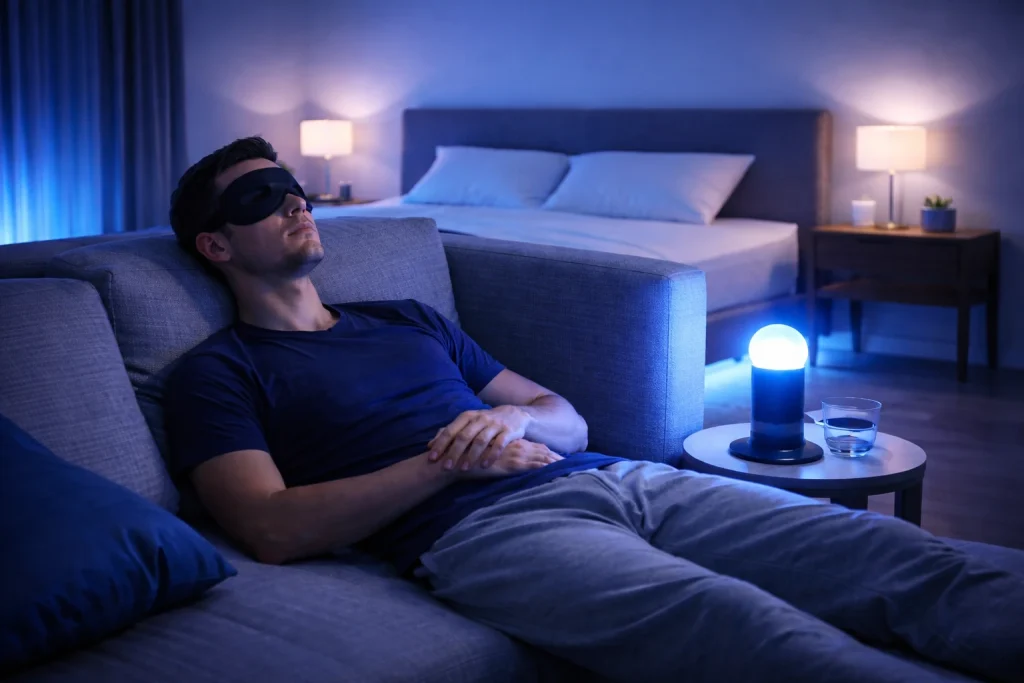
Creating a Calm Bedroom with Blue LED Bulbs
Blue LED bulbs can look modern and stylish, but a bedroom works best when lighting feels soft and gentle in the evening. Here’s a simple approach to make your space feel relaxing:
- Layer your lighting: Use a small blue LED lamp in a corner instead of lighting the entire bedroom with a bright blue bulb.
- Adjust brightness: Dimmable blue LED bulbs let you lower intensity as bedtime nears.
- Mind the timing: Turn off brighter blue LEDs about an hour before bedtime so the room feels calmer.
- Check your space: Step back and notice how the room feels—if the glow feels sharp, add a warm lamp or shade to soften it.
With small adjustments, blue LED bulbs can remain part of a modern bedroom while keeping evenings peaceful and gentle.
Why it matters: Thoughtful lighting choices shape the mood of your bedroom, helping evenings feel calm, restful, and ready for a good night’s sleep.
Simple Blue LED Habits for a Restful Night
Small changes can make a big difference when using blue LED bulbs in your bedroom. Try these easy habits to keep evenings calm:
- Set a gentle routine: Dim or turn off brighter blue LEDs about an hour before bed.
Use layers: Use a blue LED lamp in a small corner instead of lighting the entire bedroom with it. - Limit task lighting at night: Keep bright blue LEDs for reading or work corners, not the whole room(blue light sleep – PMC).
- Observe your mood: Pay attention to how the room feels—if it seems too sharp, soften it with a lamp shade or by lowering the brightness.
- Experiment with dimmers: Adjustable brightness lets you find the perfect calm level for your evening.
Example: Emma’s blue LED lamp felt too bright at night, so she moved it to a corner instead of lighting the entire bedroom with it. The room instantly felt calmer and more comfortable.
Final Thoughts
Are blue LED lights good for sleep? They can influence how your bedroom feels in the evening, and brighter blue‑rich light close to bedtime is more likely to make falling asleep harder.
With mindful placement, dimming, and layering, you can enjoy their modern style without sacrificing calm. Try adjusting your blue LED setup tonight and see how different lighting choices can change the atmosphere of your bedroom.
If you want to choose friends wisely, read our guide first.
FAQs
1. Are blue LED lights good for sleep?
Exposure to bright lights at night can keep your mind alert, especially when the light is cool and blue‑rich. Position your LED bulb thoughtfully to make the bedroom feel calmer.
2. How does a blue LED bulb for the room affect evening comfort?
Cool bulb lighting can energize a space. Using the LED bulb in a corner or dimming it helps maintain a relaxed atmosphere.
3. Can cool blue LED bulbs influence bedtime routines?
Strong illumination late in the evening can slow down winding down, partly by affecting melatonin and keeping the brain more alert. Pairing the LED bulb with soft lighting supports a peaceful environment.
A Weekly Letter for Your Wellness Journey
A short, quiet note each week: seasonal tips, one mindful practice, and our newest guide. No fluff. No spam—just grounded wisdom for your week.
Disclaimer
This article is for general wellness and educational purposes only. It is not a substitute for professional medical advice, diagnosis, or treatment. Always consult a qualified healthcare provider before making changes to your health routine, including the use of supplements, especially if you are pregnant, breastfeeding, taking medication, or managing a medical condition.
Related
-

How to Adjust to Daylight Saving Time (DST): What Sleep Doctors Actually Recommend
Learning how to adjust to daylight saving time can help your body clock stay on…
-

Morning Anxiety: Why You Wake Up Feeling Anxious (And What to Do About It)
Morning anxiety is more predictable than it feels. Here’s why it happens — cortisol spikes,…
-
How to Have a Relaxing Night at Home — When the Usual Tricks Haven’t Worked
How to have a relaxing night at home when the lavender-and-tea version hasn’t landed. Diagnostic,…