

Burnout & Nutrition : What to Eat When You’re Mentally Exhausted
You’re running on fumes. Your mind feels foggy, your body is heavy, and no amount of sleep seems to help. If you’re experiencing burnout, you already know it’s not just mental—it’s physical. Your energy is gone. Your mood is flat. And your brain feels like it’s working through syrup.
Here’s what many people don’t realize: the road back from burnout doesn’t start with rest alone. It starts with burnout nutrition—what you eat, when you eat, and how those nutrients rebuild the stress-depleted systems in your body.
The foods you eat directly regulate the stress hormones flooding your system, support the neurotransmitters that control mood, and rebuild the cellular energy your burnout has depleted. Burnout isn’t a character flaw or a motivational problem. It’s a nutritional debt. And you can begin repaying it today.
Key Takeaways
- Burnout drains both your body and brain, not just your motivation—it’s a state of neurochemical depletion.
- What you eat directly controls cortisol (your stress hormone), energy production, and emotional resilience.
- Nutrients like magnesium, omega-3s, B vitamins, and dietary fiber aren’t optional—they’re the building blocks your burned-out brain is missing.
- Skipping meals or relying on caffeine, sugar, and ultra-processed foods doesn’t just fail to help; it deepens the cycle of burnout.
- Small, consistent nutrition shifts beat extreme diets or “hacks”—your nervous system recovers on routine and reliability.
- Meal timing and frequency matter as much as food choices: stable eating patterns = stable cortisol = faster recovery.
Too drained to read right now? No judgement. Watch “Burnout Recovery Bowl: Best Foods for Energy, Mood & Brain Health” on YouTube and give your brain a break.
What Is Burnout — and How Is It Different from Stress?
Stress is your body’s short-term reaction to pressure. It can be useful when it’s temporary—helping you focus, solve problems, or meet deadlines. Burnout is what happens when stress becomes chronic and your mental and physical reserves are depleted.
Common signs of burnout
Physical
- Constant fatigue, even after sleep
- Headaches, chest tightness, or stomach issues
- Sugar or carb cravings
- Low immunity and frequent illness
Mental & emotional
- Forgetfulness and “brain fog”
- Feeling detached or numb
- Irritability or low mood
- Loss of motivation or joy in usual activities
Burnout doesn’t happen overnight. The sooner you notice symptoms, the faster you can repair the damage. And here’s the critical part: nutrition is one of the fastest, most accessible ways to begin that repair—because it works at the biochemical level where burnout damage happens.
The Gut–Brain Link: Why the Burnout & Nutrition Connection Isn’t “Just in Your Head”
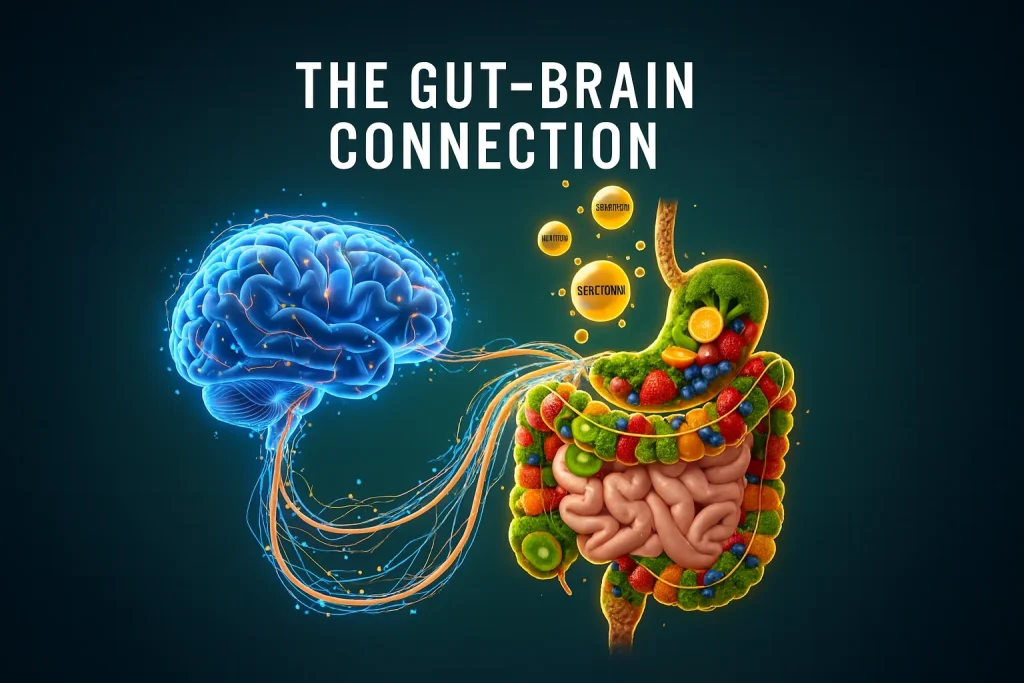
Your gut and brain communicate through hormones, neurotransmitters, and the microbes living in your digestive system. A balanced microbiome helps regulate mood, memory, sleep, and stress response—and food is a major part of that balance. In fact, the fatty acids and amino acids you eat literally build your brain’s protective barrier (the blood-brain barrier), which is compromised during chronic stress. Rebuilding it is part of recovery.
Want to go deeper? Read about the gut–brain connection and how it affects burnout and stress resilience.
How Nutrition Supports Burnout Recovery
1) Eat to Restore Steady Energy
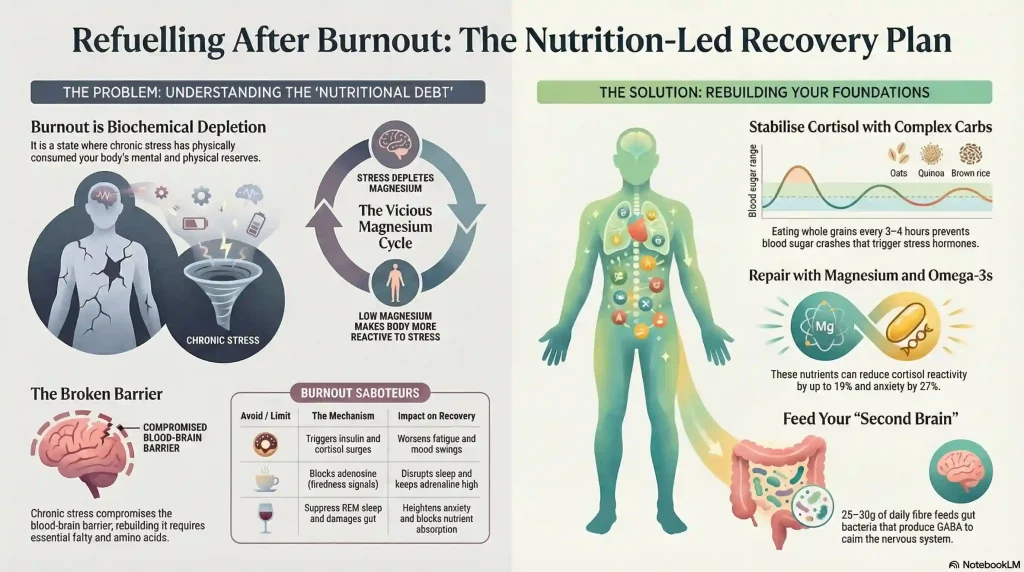
Why this matters: When you skip meals or eat refined carbs, your blood sugar spikes and crashes. Each crash triggers a cortisol surge—your body’s emergency hormone. Repeated cortisol spikes are like driving a car in stop-and-go traffic all day. Your nervous system never gets to idle. By eating regular, balanced meals, you’re telling your nervous system: “We’re safe. We have fuel. You can relax.”
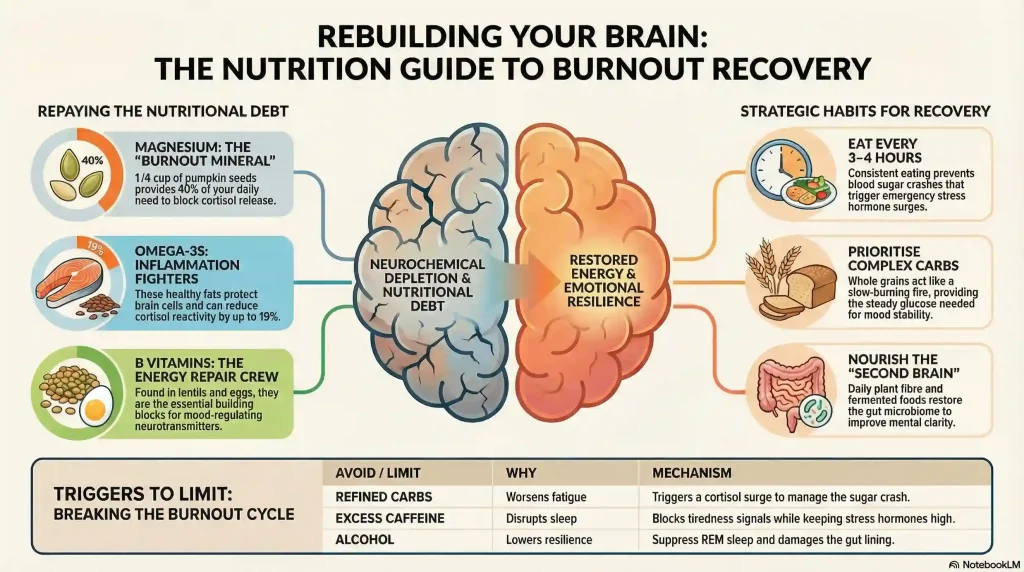
Eat every 3–4 hours. Aim for three balanced meals plus one or two nutrient-dense snacks. This keeps your blood sugar (and cortisol) stable, preventing the emotional crashes that feel like burnout deepening.
Lead with complex carbs. Whole grains, oats, quinoa, beans, sweet potatoes, and barley release glucose slowly—they’re like a slow-burning log fire instead of a match flare. This prevents the spike-and-crash cycle that worsens emotional exhaustion and mood swings.
Don’t skip meals. Irregular eating pushes your body into survival mode and elevates stress hormones even when nothing stressful is happening. One woman found she was skipping lunch during “busy days”—and then wondering why 3 PM always brought anxiety and irritability. When she started eating on schedule, her mood shifted within a week.
Comfort food still counts—if it nourishes. Soups, stews, warm porridges, herbal teas, and roasted vegetables are soothing and easy on digestion. When you’re burned out, your digestive system is also stressed; warm, soft foods are gentler on it.
The research: A randomized study from the NIH found that people who ate regular, nutrient-dense carbohydrates showed significantly reduced cortisol reactivity over eight weeks—meaning their bodies released less stress hormone in response to challenges.
2) Feed Your Brain the Nutrients It’s Burning Through
Burnout doesn’t just make you tired. It metabolically consumes certain nutrients—especially the ones your brain needs to stay balanced. Replacing them is not optional recovery; it’s active repair. The connection between burnout & nutrition is stronger than you might think.
Magnesium (the “burnout mineral”)
Magnesium regulates your nervous system and helps your body respond to stress without escalating into panic. It blocks the release of cortisol from your adrenal glands and supports the production of serotonin (your mood stabilizer). When you’re burned out, your body depletes magnesium faster than you can replace it, creating a vicious cycle: low magnesium → higher stress response → more magnesium depletion.
Sources: Leafy greens (spinach, Swiss chard), pumpkin seeds, almonds, cashews, black beans, quinoa, dark chocolate. A single serving of pumpkin seeds (about 1/4 cup) contains 40% of your daily magnesium need. Research from the NIH shows that magnesium supplementation or dietary increase can reduce anxiety by up to 27% in stressed populations.
Omega-3 Fatty Acids (inflammation fighters)
Chronic stress triggers inflammation throughout your brain and body—this inflammation is partly why burnout feels so exhausting and heavy. Omega-3s reduce this inflammation, protect your brain cells from stress damage, and help your neurons communicate more effectively. Studies show they reduce cortisol reactivity by as much as 19%.
Sources: Fatty fish (salmon, sardines, mackerel), walnuts, chia seeds, flax seeds, avocados. Two servings of fatty fish per week is enough for most people. If you’re vegetarian, chia seeds (2 tablespoons) or ground flaxseed in oatmeal work well.
B Vitamins (energy repair crew)
B vitamins (especially B6, B12, and folate) fuel the production of neurotransmitters—serotonin, dopamine, GABA—the brain chemicals that regulate mood and calm. They also power your cellular energy production. Burnout burns through B vitamins quickly.
Sources: Brown rice, lentils, chickpeas, eggs, leafy greens, whole-grain bread. One egg for breakfast + a handful of spinach in lunch = significant B vitamin coverage.
Vitamin C + Iron (oxygen delivery)
Burnout often comes with low-grade anemia (iron deficiency), which makes you feel heavier and more fatigued. Vitamin C helps your body absorb iron. Together, they improve oxygen delivery to your brain and muscles.
Sources: Citrus fruits, peppers, berries, broccoli (vitamin C) paired with beans, poultry, lentils, fortified grains (iron). Squeeze fresh lemon over your beans or add bell peppers to your rice—the vitamin C boost makes iron absorption jump by 3–4 times.
A quieter inbox. One letter a week.
Wellness that doesn't shout. Every week, one thoughtful letter on rest, resilience, and the small habits that add up. Written with care, backed by evidence.
The bottom line
You’re not eating to feel better emotionally (though that’s a side effect). You’re eating to rebuild the biochemistry that burnout has depleted.
3) Nourish the Gut—Your Second Brain
Your gut microbiome (the trillions of bacteria in your digestive tract) isn’t just involved in digestion—it directly communicates with your brain via the vagus nerve and through neurotransmitter production. When your microbiome is balanced, you feel more resilient. When it’s imbalanced (which happens during burnout), you feel more anxious, depressed, and foggy.
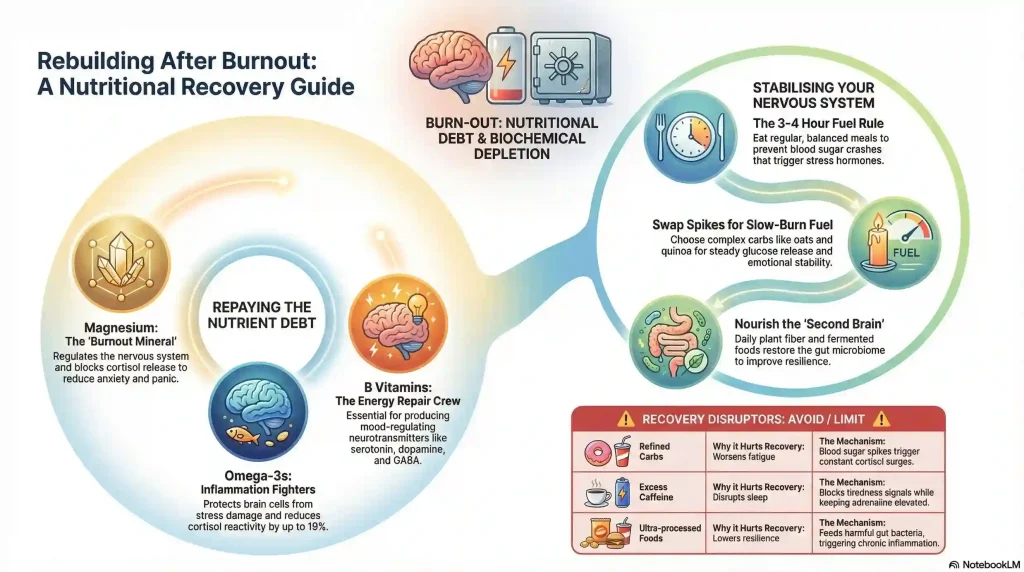
Add plant fiber daily: Fiber feeds the good bacteria (Lactobacillus and Bifidobacterium) that produce GABA and short-chain fatty acids—both of which calm your nervous system. Without enough fiber, harmful bacteria take over and produce inflammatory compounds that worsen anxiety. Aim for 25–30g of fiber daily from fruits, vegetables, legumes, nuts, seeds, and whole grains.
Practical tip: One apple (4g) + one cup of lentil soup (8g) + a small salad (3g) = 15g. Add a handful of berries and you’re near your target.
Include fermented foods: These foods contain live beneficial bacteria that colonize your gut and begin restoring balance immediately: yogurt or Greek yogurt (live cultures), kefir (even more strains than yogurt), kimchi and sauerkraut (Lactobacillus-rich), miso (fermented soy, adds umami and calm), and tempeh (easier to digest than tofu). One small serving of fermented food daily is enough to shift your microbiome over 2–4 weeks.
Hydrate strategically: Mild dehydration (as little as 1–2% fluid loss) raises cortisol and slows cognition by 10–15%. Most burned-out people are also dehydrated because stress makes you forget to drink water, or you substitute caffeine. Aim for 6–8 glasses of water daily, plus herbal teas (chamomile, passionflower, and lemon balm have calming compounds). Pro tip: Add electrolytes (a pinch of sea salt, a squeeze of lemon) to some of your water—your nervous system absorbs hydration more efficiently with electrolyte balance.
The result: A healthier microbiome = improved mood, deeper sleep, better stress resilience within 2–3 weeks.
Cortisol doesn’t just drain your energy — it also shortens your fuse. Here’s how stress chemistry fuels anger.
The (Worst) Foods for Burnout & Nutrition –
| Avoid / Limit | Why | The Mechanism |
|---|---|---|
| Refined carbs & sugary snacks | Spike-and-crash cycle worsens fatigue and mood swings. | Blood sugar spike → insulin release → cortisol surge to manage the crash. Repeat this cycle several times a day and you’re micro-stressing your nervous system constantly. |
| Excess caffeine | Raises stress hormones, disrupts sleep, and creates dependency. | Caffeine blocks adenosine (the brain’s “tiredness signal”), so you keep pushing. But cortisol and adrenaline stay on board. Sleep gets worse. Burnout deepens. |
| Alcohol | Disrupts REM sleep and nutrient absorption; can heighten anxiety. | Alcohol suppresses REM sleep (where emotional processing happens). It also damages the gut lining, feeding inflammation and worsening microbiome imbalance. |
| Ultra-processed foods | Can disrupt the gut and increase inflammation—lowering resilience. | These foods feed harmful bacteria in your gut (dysbiosis). They produce lipopolysaccharides (LPS), which trigger chronic inflammation that keeps cortisol elevated. |
Small Lifestyle Shifts That Speed Burnout Recovery
If you want the bigger picture beyond burnout, our guide to the benefits of healthy eating walks through six simple steps for steadier energy and mood every day.
- Gentle movement (even 10-minute walks count)
- One phone-free wind-down hour at night
- Eat at regular times (your nervous system loves routine)—eating at consistent times each day teaches your body to expect stable fuel. Your cortisol response becomes more predictable and manageable.
- Practice something that brings calm, not productivity
- Ask for support instead of powering through alone
- Prioritize one nourishing meal per day. If you can’t overhaul your diet immediately, start with one meal—breakfast—that you make yourself with whole foods. One meal per day shifts your biochemistry in measurable ways.
What to Remember About Burnout & Nutrition
In working with patients in burnout, a pattern emerges: people often feel guilty for needing to eat differently or more carefully during recovery. They think nutrition is just “self-care” fluff, or that it’s somehow weakness to need support from food. But that’s not accurate.
Burnout is a state of metabolic and neurochemical depletion. Your brain literally cannot manufacture the mood-regulating chemicals it needs without the right building blocks. You’re not being “weak” or “picky” by eating magnesium-rich foods; you’re being strategic, and you’re rebuilding the foundations.
Burnout recovery isn’t instant, and it’s not just about mindset—it’s about replenishing a system that’s been running on empty. Food is one of the most accessible ways to rebuild energy, emotional balance, and mental clarity. It doesn’t require a therapist appointment or a prescription. It’s available three times a day.
If you’re unsure where to start, try this: Pick one nourishing meal per day and eat it without rushing—preferably with your phone away. Pay attention to how you feel 2–3 hours later. Does your mood shift? Does your focus improve? Does your anxiety soften? Most people notice a difference within one week. That’s your body telling you it was depleted, and now it’s recovering.
You’re already burned out. You don’t need to be perfect about this. You just need to be consistent.
Free Resource: Burnout Nutrition Checklist
Download the quick-glance guide to the best foods, nutrients, and habits that support real recovery.
Burnout & Nutrition: FAQ’s
Can food really help with burnout, or is it just a mindset issue?
Nutrition plays a measurable role in recovery. Nutrients like magnesium, omega-3s, and B vitamins help regulate stress hormones, restore energy production, improve sleep, and support emotional balance. Burnout is not only psychological—it’s biochemical. The neurotransmitters that control your mood, your ability to focus, and your emotional resilience are built from the amino acids, vitamins, and minerals in your food. Change the food, and you change the chemistry. If you’re exploring targeted support, these six supplements for burnout may also help.
Which foods help the most when I’m mentally exhausted?
Prioritize complex carbs (for steady energy and serotonin production), lean proteins (for stable blood sugar and neurotransmitter building blocks), healthy fats (for brain protection and inflammation reduction), magnesium-rich foods (for nervous system regulation), fermented foods (for gut-brain balance), and colorful plants (for antioxidants). Oats, salmon, lentils, leafy greens, nuts, yogurt, and herbal teas are powerful allies. The “best” food is the one you’ll actually eat consistently.
What should I eat if I have no appetite due to stress or burnout?
Appetite loss during burnout is common—stress suppresses the hunger signal while cortisol is high. Start with warm, easy-to-digest meals like bone broth soups, oatmeal, smoothies with Greek yogurt, scrambled eggs, or mashed sweet potatoes. These are gentle on digestion and calorie-dense (you get nutrition without eating a large volume). Appetite often returns as stress hormones drop and blood sugar stabilizes—usually within 1–2 weeks of consistent eating.
Is it true that eating more frequently helps burnout recovery?
Yes, but with nuance. Eating every 3–4 hours (rather than two large meals or skipping meals) keeps your blood sugar and cortisol stable. This prevents the emotional crashes and irritability that come with hunger-induced stress hormone spikes. However, “more frequently” doesn’t mean constant snacking. Three meals + one or two planned snacks is ideal. The key is consistency—your nervous system thrives on predictable fuel, not constant grazing.
Are caffeine and burnout a bad mix?
Caffeine can boost alertness short-term, but it raises cortisol and disrupts deep sleep—both can worsen burnout over time. If you need caffeine to function, your body is signaling depletion. Consider: Are you reaching for coffee because you’re hungry? Dehydrated? Exhausted from poor sleep? Often, these underlying issues can be addressed with nutrition, and then caffeine dependency naturally decreases. If you love coffee, one cup per day (before 2 PM) with food is generally safe; more than that tends to sabotage recovery.
What’s the difference between burnout and adrenal fatigue?
“Adrenal fatigue” isn’t a medically recognized diagnosis, while burnout is (formally recognized by the WHO). Both describe long-term stress depletion, but burnout has clearer clinical definitions and evidence-based interventions. The nutrition advice is similar either way: support your nervous system, stabilize blood sugar, and provide the building blocks for neurotransmitter and energy production.
How long does it take for nutrition changes to affect burnout symptoms?
This varies by person and by how depleted you are. Some people notice mood or energy shifts within 3–5 days of stable eating and nutrient support. Others take 2–3 weeks. Sleep typically improves first (within 1–2 weeks), followed by mood stability, then energy and focus. The deeper the burnout, the longer recovery takes—but the earlier you start nutrition intervention, the faster the shift. Consistency matters more than perfection: eating well 80% of the time beats eating perfectly 20% of the time.
Should I take supplements, or is food enough?
Food should be your foundation. However, some nutrients are hard to get in sufficient quantities from food alone—particularly magnesium, omega-3s, and vitamin D (if you live in a northern climate). If you’re severely depleted by burnout, a targeted supplement for 4–8 weeks alongside nutrient-rich foods can accelerate recovery. Work with your doctor or a registered dietitian to identify any specific deficiencies. See this guide to burnout supplements for evidence-based options.
Disclaimer: This article is for general wellness and educational purposes only. It is not a substitute for professional medical advice, diagnosis, or treatment. Always consult a qualified healthcare provider before making changes to your health routine, including the use of supplements, especially if you are pregnant, breastfeeding, taking medication, or managing a medical condition.
Related
-

Supplements for Burnout: 6 Options To Help You Recover
Feeling drained, overwhelmed, or like you’re running on empty? This evidence-informed guide breaks down six…
-

Cognitive Burnout and Brain Fog: Causes, Symptoms, and How to Feel Like Yourself Again
You’re not broken — you’re overwhelmed, and your brain is trying to protect you. If…
-

Morning Anxiety: Why You Wake Up Feeling Anxious (And What to Do About It)
Morning anxiety is more predictable than it feels. Here’s why it happens — cortisol spikes,…